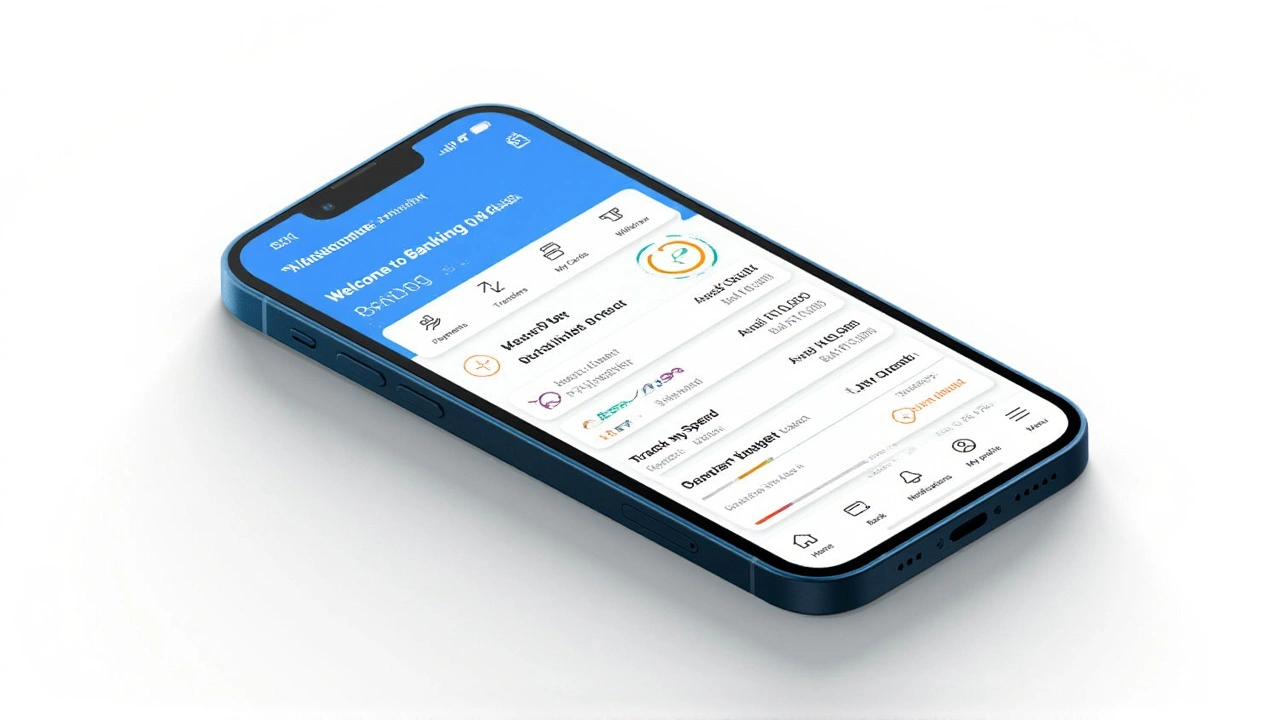
On Tuesday, November 26, 2024, First National Bank and Mastercard unveiled Globba™ — a revolutionary cross-border payment platform — at a launch event in Johannesburg. The service lets customers send money instantly to over 120 countries for as little as R30, a dramatic drop from FNB’s previous minimum fee of R100. For millions of South Africans supporting families abroad, this isn’t just a new app feature — it’s a lifeline made affordable.
Why This Matters to Everyday Families
Before Globba, sending money to Zimbabwe, Malawi, Mozambique, or Ghana often meant paying over R100 just to start the transaction — plus hidden exchange rate markups that ate into every rand sent. Many relied on informal networks or expensive money transfer agents. Now, with Globba, a domestic worker in Soweto can send R500 to her sister in Harare, and her cousin in Lusaka can receive it in a mobile wallet within minutes. The platform doesn’t just cut costs — it cuts out the middlemen who profit from desperation.
"The challenge is the underserved," said Lytania Johnson, CEO of FNB South Africa’s personal segment, at the launch. "We looked at what competitors were charging and asked: Why should sending money home cost more than a taxi ride?" The answer was clear: it shouldn’t. Globba’s pricing model — starting at R30, with no hidden fees — flips the script on traditional remittance economics.
How Globba Works — and Who It Serves
Globba leverages Mastercard Move, a global payment infrastructure that connects to over 95% of the world’s banked population. But here’s the twist: FNB isn’t just tapping into global tech — it’s tailoring it for Africa’s realities. Users can send funds directly to bank accounts, mobile wallets like EcoCash or MTN Mobile Money, or cash pickup points across 45 African countries — all through the FNB or RMB Private Banking app.
That’s critical. In many rural areas, bank branches are miles away, but mobile phones are everywhere. By integrating with mobile money systems, Globba bypasses the need for formal banking infrastructure. It’s financial inclusion by design. And it’s not just for individuals. Small businesses in Pretoria importing goods from Nairobi or Durban sourcing textiles from Accra can now settle invoices faster and cheaper than ever before.
A Strategic Move in Africa’s Digital Economy
"Cross-border payments are the cornerstone of Africa’s digital economy," said Onur Kursun, Executive Vice President for EEMEA at Mastercard. "This isn’t just about sending money — it’s about building trust in digital transactions across borders. When families can send money securely, when SMEs can pay suppliers without waiting weeks, that’s how economies grow."
South Africa’s G20 presidency last year pushed for faster, cheaper international payments by 2027. Globba isn’t just aligned with that goal — it’s ahead of it. While global regulators debate standards, FNB and Mastercard are already delivering. The platform’s development took just one year — a lightning pace in banking innovation.
What’s more, digital adoption at FNB has surged. Over 70% of customer interactions now happen via mobile apps. Globba isn’t an experiment — it’s the natural evolution of a bank that’s betting big on digital behavior. And it’s working: transaction volumes have doubled in the past two years. This isn’t growth. It’s momentum.

What’s Next? A Pan-African Network
FNB and Mastercard didn’t stop at launching Globba. They’ve already mapped out the next phase: expansion across FNB’s African network, pending regulatory approvals. The ultimate vision? Open the platform to non-FNB customers. Imagine a future where a Nigerian freelancer can receive payment from a client in Cape Town — without needing a South African bank account. That’s the ambition.
"We’re not building a bank product," Johnson said. "We’re building a payment ecosystem. One that belongs to Africa."
If realized, Globba could become the backbone of a continent-wide remittance network — rivaling Western Union, Wise, and even mobile money giants like M-Pesa. The scale is enormous. In 2023, Africa received over $90 billion in remittances. Over 60% of that went to rural households. Most of those transfers were expensive, slow, or unreliable. Globba could change that.
Why This Is Different
Other banks have tried to cut fees. Some lowered prices but added delays. Others offered low rates but limited destinations. Globba nails all three: speed, reach, and cost. And unlike fintech startups that rely on partnerships with third-party processors, Globba runs on Mastercard’s secure, institutional-grade rails — meaning it’s built to scale without compromising safety.
The timing couldn’t be better. With inflation still biting and currency volatility high in neighboring countries, reliable, low-cost transfers are no longer a luxury — they’re essential. A mother in Bloemfontein sending R200 to her daughter studying in Harare can now do it without skipping a meal. That’s the real impact.
Frequently Asked Questions
How does Globba reduce costs compared to traditional remittance services?
Globba slashes fees to as low as R30 per transfer, down from FNB’s previous minimum of R100, and eliminates hidden exchange rate markups common with competitors like Western Union or MoneyGram. By using Mastercard Move’s direct banking network, it bypasses intermediaries, passing savings directly to users. For a typical R500 transfer to Zimbabwe, users save up to R70 per transaction.
Can non-FNB customers use Globba right now?
Currently, Globba is only available to FNB and RMB Private Banking customers via their mobile apps. But FNB and Mastercard have confirmed plans to open the platform to non-customers in the future, aiming to create a pan-African remittance network. Regulatory approvals are still pending, but the long-term goal is to make it accessible to any African with a mobile phone and ID.
Which African countries are covered by Globba’s cash pickup and mobile wallet options?
Globba supports instant transfers to bank accounts, mobile wallets, and cash pickup locations across 45 African countries, with key corridors including Zimbabwe, Malawi, Mozambique, Ghana, Zambia, Namibia, and Botswana. Mobile wallet integrations include EcoCash (Zimbabwe), MTN Mobile Money (Ghana, Uganda), and Airtel Money (Malawi, Zambia), ensuring even unbanked recipients can access funds.
How secure is Globba, and what protections are in place?
Globba runs on Mastercard Move, a platform used by major financial institutions globally, with end-to-end encryption, real-time fraud monitoring, and compliance with South African and international anti-money laundering standards. Each transaction requires two-factor authentication via the FNB app, and users receive instant SMS and in-app notifications. There’s also a 24/7 dispute resolution team for unauthorized transfers.
What’s the timeline for expanding Globba beyond South Africa?
FNB and Mastercard plan to roll out Globba to other African markets where FNB operates — including Namibia, Botswana, and possibly Kenya — subject to local regulatory approvals. The first international expansion is expected by mid-2025. The goal is to have a fully functional pan-African network within 18 months, with potential integration into other FirstRand group banks like RMB and Rand Merchant Bank.
How does Globba align with global financial goals like the G20’s 2027 target?
The G20 aims to reduce the average cost of remittances to under 3% by 2027. Globba’s R30 fee on a R500 transfer equals just 6% — already better than the African average of 8.2%. But more importantly, Globba delivers instant settlement, something most global systems still can’t match. By combining speed, affordability, and reach, FNB and Mastercard are ahead of the global curve — turning policy goals into real-world results.
Sabir Malik
November 30, 2025 AT 01:24This is honestly one of the most human-centered financial innovations I’ve seen in years. I’ve watched my cousin in Harare struggle to get money from his sister in Soweto - he’d wait days, pay R120, and still get less than expected because of hidden rates. Now? He gets it in minutes, full amount, no drama. It’s not just about the R30 - it’s about dignity. When you stop treating remittances like a luxury service and start treating them like a basic right, that’s when real progress happens. I hope this becomes the standard across Africa and beyond. Banks should be doing this, not just as a PR move, but as a moral obligation.
Debsmita Santra
December 1, 2025 AT 17:42Imagine a domestic worker in Pretoria sending R500 to her niece in Lusaka and knowing exactly how much will land without some middleman siphoning off 20% - that’s not innovation that’s justice. Globba’s integration with MTN and EcoCash is genius because it meets people where they are not where banks wish they were. The infrastructure is already there in the form of mobile phones so why build new branches when you can build digital bridges? I’ve seen too many fintechs talk about inclusion but only serve urban elites. This actually reaches the rural moms the system forgot. And no hidden fees? That’s rare enough to be revolutionary. I’m not usually this emotional about banking but this… this feels like change
Vasudha Kamra
December 1, 2025 AT 18:09The technical architecture behind Globba is impressive. Leveraging Mastercard Move enables direct settlement between correspondent banks, eliminating the need for multiple intermediaries that traditionally inflate costs and delay transactions. The platform’s compliance with PCI-DSS, ISO 20022, and FATF guidelines ensures institutional-grade security while maintaining user accessibility. Furthermore, the API integration with mobile money operators like EcoCash and Airtel Money demonstrates a deep understanding of heterogeneous financial ecosystems. Unlike previous remittance platforms that treated African markets as afterthoughts, Globba is designed from the ground up for regional interoperability. This is not merely a fee reduction - it is systemic financial infrastructure re-engineering.
Abhinav Rawat
December 2, 2025 AT 10:52You know what’s wild? We’ve spent decades talking about financial inclusion like it’s some kind of charity project. But here’s the truth - it’s not charity. It’s economics. When people can send money fast and cheap, they spend it. When they spend it, local economies grow. When local economies grow, people start businesses. When people start businesses, they hire. And when they hire, they pay taxes. So this R30 fee isn’t just a discount - it’s a multiplier. It’s the first domino in a chain reaction that could lift entire communities. I used to think big banks were too slow to care. Turns out they just needed the right incentive. And now they’ve got it - not just profit, but purpose. It’s beautiful, really. Sometimes the most powerful changes come not from protest, but from a well-designed app.
Shashi Singh
December 2, 2025 AT 22:23Surbhi Kanda
December 3, 2025 AT 22:24Let’s not oversimplify this. While the R30 fee is commendable, the real bottleneck isn’t cost - it’s regulatory fragmentation. Each African country has different KYC, AML, and foreign exchange controls. FNB’s ability to navigate this across 45 jurisdictions is a feat of legal engineering, not just tech. But the real test will be scalability. Can they maintain SLAs when transaction volumes spike during holiday seasons? Will mobile money agents have the liquidity to cash out during peak demand? And what happens when a country suddenly imposes capital controls? This isn’t a product launch - it’s a systemic challenge. I’m impressed, but I’m not yet convinced it’s sustainable without deeper state collaboration.
Sandhiya Ravi
December 3, 2025 AT 22:55I just sent R300 to my aunt in Malawi using Globba and I cried. Not because it was cheap - though it was - but because she got it before I finished my coffee. She called me right away, heard my voice through the app notification, and said ‘I can buy medicine now’. That’s what this is. Not a feature. Not a product. A heartbeat. I used to feel guilty every time I sent money because I knew the fees were eating into her food budget. Now I don’t feel guilty anymore. I just feel grateful. To FNB, to Mastercard, to whoever made this possible. You didn’t just build an app. You gave people back their peace of mind. Thank you.
JAYESH KOTADIYA
December 4, 2025 AT 19:53